
OpenAI podcast acquisition
OpenAI Just Bought a Podcast Network – Why It Matters for AI News and Public Trust
Introduction
OpenAI podcast acquisition
OpenAI has made an unexpected move. The company acquired The Batch Podcast Network (TBPN) – a popular platform that explains complex AI topics to everyday listeners. This is not just another tech deal. It could reshape how AI companies communicate with the public and manage their reputation.

Why does this matter? Because when AI companies start owning the media that covers them, it changes the flow of information. Questions arise about transparency, fair competition, and public trust.
In this post, we will explore:
- Why OpenAI acquired TBPN
- How this affects AI news and information flow
- What it means for competition and independent journalism
Let us dive in artificial intelligence media
Details of the OpenAI Podcast Network Buyout
OpenAI finalized the acquisition of TBPN for an estimated $15 million. The negotiation process took only six weeks – unusually fast for a media deal of this size. OpenAI has promised to maintain editorial independence for at least 18 months.

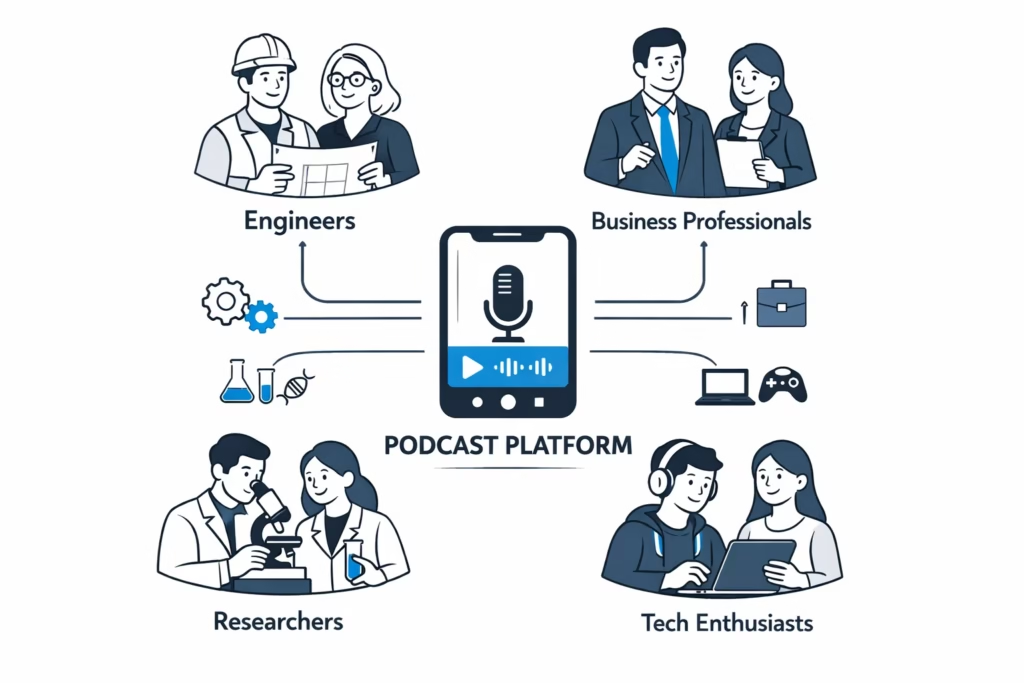
The network reaches 2.8 million monthly listeners. Its audience includes:
- 45% tech professionals (engineers, data scientists)
- 28% business leaders (executives, product managers)
- 15% academic researchers
- 12% general tech enthusiasts
Geographically, 60% of listeners are in North America – key markets where OpenAI faces regulatory and public scrutiny.
Why OpenAI Made This Media Acquisition Move
For years, AI companies have played reactive communication – issuing statements only after controversies erupted. OpenAI is now shifting to proactive communication. By owning a media outlet, they can:
- Respond immediately to negative stories.
- Explain complex technical concepts in simple language through long-form audio.
- Build trust through regular,authentic conversations.
The financial logic is also strong. Industry experts estimate OpenAI communication strategy would need to spend $40–60 million annually on advertising to reach the same qualified audience that TBPN delivers organically.
The Transparency Challenge in AI Development
The Gap in Public Understanding
Most people do not understand how AI works. Surveys show that 73% of Americans cannot explain machine learning, yet 64% make daily decisions based on AI-generated content. This gap leads to either over-trust or over-fear – neither is healthy.

Social media makes things worse. Viral videos of AI generating art or poetry create unrealistic expectations. Horror stories about biased algorithms create unnecessary panic. The truth – that AI is a powerful but flawed tool – gets lost.
OpenAI’s Past Transparency Problems
OpenAI itself has faced criticism before:
- They withheld GPT-2, calling it “too dangerous,” but gave vague explanations.
- The GPT-4 release included limited details about training data and limitations.

The board drama in November 2023 (Sam Altman’s firing and rehiring) exposed internal disagreements that had been hidden from the public.However, OpenAI has started to improve. They now publish more detailed safety reports and model cards. The TBPN acquisition may be another step toward better communication – acknowledging that technical brilliance alone is not enough
How This Podcast Acquisition Changes AI Communication
Strategy
From Reactive to Proactive: OpenAI communication strategy
Traditional tech PR is about damage control. A crisis happens, then a statement is released. OpenAI is flipping this model. By owning a podcast network, they can shape the narrative before it forms.

When GPT-5 launches or when safety concerns arise, OpenAI will not need to rely on third-party journalists. They can explain their side directly, on their own timeline.
Direct Access for Complex Topics
Podcasts are perfect for deep dives. A 60-minute conversation allows hosts to:
- Use analogies that different audiences understand
- Clarify misunderstandings in real time
- Explore multiple angles of a single issue
OpenAI can now walk listeners through their safety research, alignment techniques, and specific technical challenges – without the filter of mainstream media that often prioritizes sensationalism.
Building Trust Through Audio
Listeners develop parasocial relationships with podcast hosts. When OpenAI executives and researchers become regular voices in people’s ears, they transform from corporate figures into trusted guides. This trust translates into influence – on public opinion, on regulators, and on the broader AI debate.

Implications for Competition and Information Flow
Impact on Rival Companies
Google, Microsoft, Anthropic and others now face a competitor that owns a popular news platform. This creates a clear conflict of interest. Will TBPN give fair coverage to OpenAI’s rivals? Unlikely.

Other AI companies will likely respond by acquiring their own media outlets. This could lead to a fragmented media landscape where each major AI company controls its own echo chamber.
Risk of Biased Reporting
Even with promises of editorial independence, ownership influences content. Critical stories about OpenAI may be downplayed, while competitor weaknesses may be highlighted. Audiences may not immediately recognize this slant – making it especially dangerous.

The Squeeze on Independent Journalism
Independent AI journalists and researchers will face tougher times. Fewer neutral platforms remain. Investigative work requires funding and reach – both become harder when big tech companies control the pipes.

Academic researchers may also feel a chill. If your findings criticize a media-owning AI company, will your work get the same visibility? This could discourage critical research.
Building Public Trust Through Media Ownership – Pros and Cons
Potential Benefits
If done ethically, owned media can offer real advantages:
- Direct communication – no distortion by third-party outlets.
- Myth-busting – correcting common misconceptions about AI.
- Free education – making technical knowledge accessible to all.

Real Risks
However, the dangers are significant:
- Propaganda risk – if the 80/20 rule (80% education, 20% promotion) is not followed, the platform becomes a marketing machine.
- Pressure on independent voices – smaller journalists cannot compete with corporate funding.
- Regulatory backlash – governments may introduce new rules that make it harder to criticize AI companies.
What OpenAI Must Do
To maintain credibility, OpenAI should:
- Honor the 18-month editorial independence promise – and extend it.
- Publish regular transparency reports about how TBPN operates.
- Invite external audits of their media content.
- Continue supporting independent AI journalism through grants or partnerships.
Conclusion
OpenAI’s acquisition of The Batch Podcast Network is a double-edged sword.

On the positive side, it could improve public understanding of AI. Direct, honest communication can reduce fear and confusion. OpenAI can explain its safety work and limitations without media distortion.
On the negative side, it threatens fair competition and independent journalism. When one company controls both the technology and the news about it, the public loses access to balanced information.
What should you do? Stay informed. Follow multiple sources – not just corporate-owned media. Support independent AI journalists. And ask hard questions when you see potential bias.
Do you think AI companies should own news platforms? Share your thoughts in the comments.
Stay updated with the latest AI news at todayaireport.com.

“You may also like”
5 ai Tools evry vlogger should use

If you’re looking for a deep strategy experience, wargameon is a fantastic choice. Its intricate gameplay and engaging mechanics will keep you hooked for hours. Prepare for challenging battles and rewarding victories in this impressive wargame!
Pingback: Billboard Advertising Guide 2026 – Design, Cost, Placement & ROI - Today AI Report
Pingback: AI Podcasts Review 2026: Create AI Podcasts Without Recording - Today AI Report