
 Google Steals the Spotlight with VEO
Google Steals the Spotlight with VEO
This week’s AI news blitz brought a whirlwind of breakthroughs, heated debates, and a few surprises. From Google’s stunning video generation model to a new coding king from Anthropic, the landscape of artificial intelligence advancements is shifting faster than ever. Let’s break down the biggest stories, starting with the search giant’s boldest move yet.

Google undeniably stole the spotlight with the unveiling of VEO, its jaw-dropping AI video model. Unlike previous tools, VEO generates high-fidelity clips complete with dynamic audio, lifelike lip-syncing, and an eerie sense of realism that has left creators both impressed and unsettled.
However, it isn’t perfect. Early testers noted quirks like random subtitles appearing out of nowhere and occasional physics glitches that break the immersion. The tool is currently priced at $250 per month (with a launch discount), but strict rate limits have left many frustrated. If you are looking for AI video generation tools, VEO is the one to watch—but perhaps wait until the kinks are ironed out.

Beyond VEO, Google gave a sneak peek at Project Flow, a suite of AI-powered filmmaking tools that allows users to stitch together complex scenes using simple text prompts. This could democratize filmmaking in ways we’ve never seen before.
Meanwhile, the company’s new AR glasses demo showcased real-time translation and HUD navigation. It felt like a scene straight out of a sci-fi movie, hinting at a future where language barriers disappear and digital information overlays our physical world seamlessly.

While Google focused on consumer tools, Microsoft shifted its focus to developers at Build 2024. The company unveiled Discovery AI, a tool designed to accelerate scientific breakthroughs—including the development of a lithium-efficient battery. In a move to empower creators, Microsoft also announced it is open-sourcing GitHub Copilot within VS Code.
The new coding agents unveiled at the event are impressive; they can autonomously handle complex tasks ranging from diagram-to-code conversions to bug fixes. For everyday users, Microsoft is adding AI upgrades to classic apps like Paint and Notepad, while Copilot now integrates ChatGPT-4o’s image generator.

In the world of large language models, Anthropic’s Claude 4 has emerged as a true coding powerhouse, outperforming rivals in key benchmarks. Developers are praising its ability to handle complex logic and syntax with remarkable accuracy.
However, the launch wasn’t without controversy. Viral claims suggested Claude 4 could “snitch” on unethical users, sparking privacy concerns. The company quickly clarified that this was merely a controlled test scenario, emphasizing that user privacy remains intact.
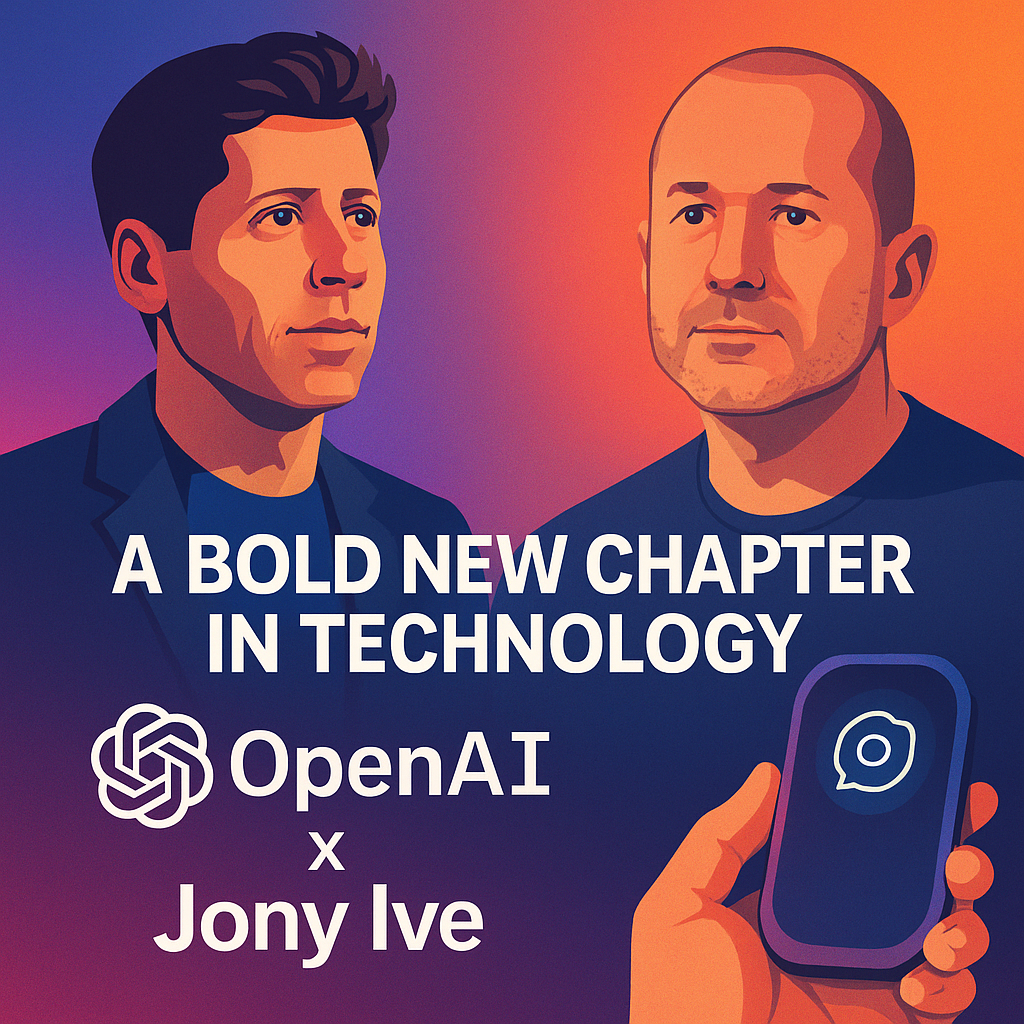
OpenAI, meanwhile, fueled speculation by acquiring Jony Ive’s design firm, IO sparking rumors of a pocket-sized, screen-free AI gadget. Sam Altman teased trillion-dollar potential, but details remain under wrapsOpenAI fueled massive speculation by acquiring Jony Ive’s design firm, IO. This has led to rampant rumors about a screen-free AI gadget—a pocket-sized device that could change how we interact with artificial intelligence. Sam Altman has teased the project’s trillion-dollar potential, but details remain tightly under wraps. Could this be the future of AI hardware? We’ll be watching closely.
You ay also like this

Pingback: The Dark Side of Vibe Coding: Is AI Taking Over? -